On the Wisdom of the Body
Out of Office 07: One bureaucratic miracle, several acts of public awkwardness, and a renewed respect for what the body knows.

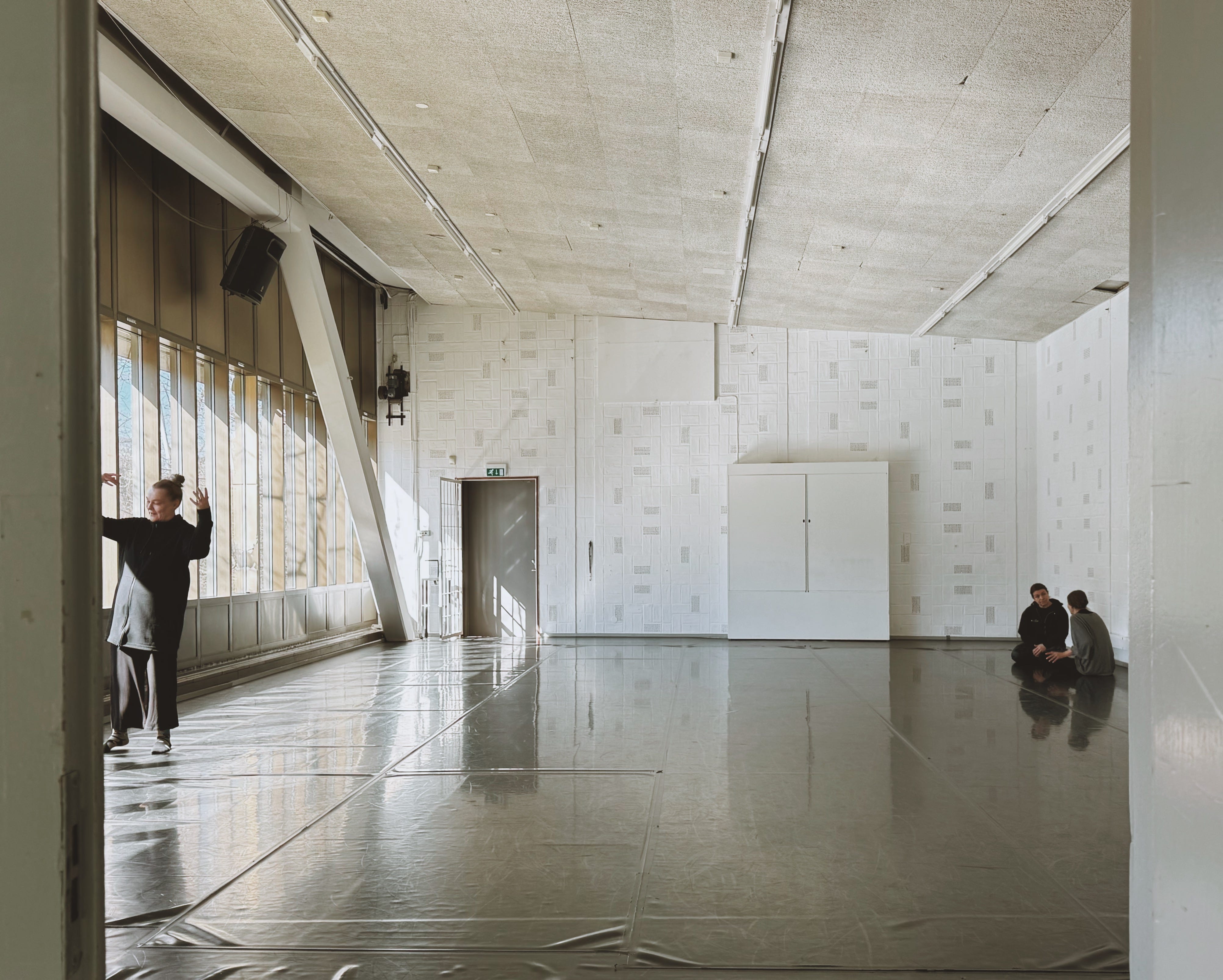
About an hour before I arrived at a somatic dance workshop in Stockholm, I learned that my Swedish citizenship had finally been approved. After two and a half years of waiting, the news arrived by email with no pomp whatsoever, and suddenly I was moving through the city with a brand-new status. With a third citizenship—or fourth, depending on how one counts Yugoslavia—I was full of emotions across the entire spectrum, vibrating with the kind of news you want to shout to everyone. I wanted to announce it to strangers on the metro, to the flower vendor down the block, to every woman gathering for the workshop. Reason, thankfully, prevailed. I limited myself to a few silent texts to close family and friends, most of them still asleep in other corners of the world, and then entered the room with as much composure as I could manage, as if nothing life-altering had happened to me an hour earlier.
I found the workshop through an Instagram ad, which I would normally ignore, but this one had the right kind of intrigue for the Out of Office experiment. After the tap festival the week before, and after abandoning a much more expensive plan involving a fishing trip to the archipelago, I was scrambling to find something for that week that I would not ordinarily do. This fit the bill perfectly.
When I arrived, I was overwhelmed by the room’s elegance. High-ceilings, softly lit, with large windows and full of women in loose clothing waiting for things to begin. The workshop drew on a mix of methods I had never heard of before, including the Ilan Lev Method1, which seemed to involve a good deal of circulation and shaking, and something called Feldenkrais2, which, as I would soon learn, meant a lot of slow and mindful work on the floor.
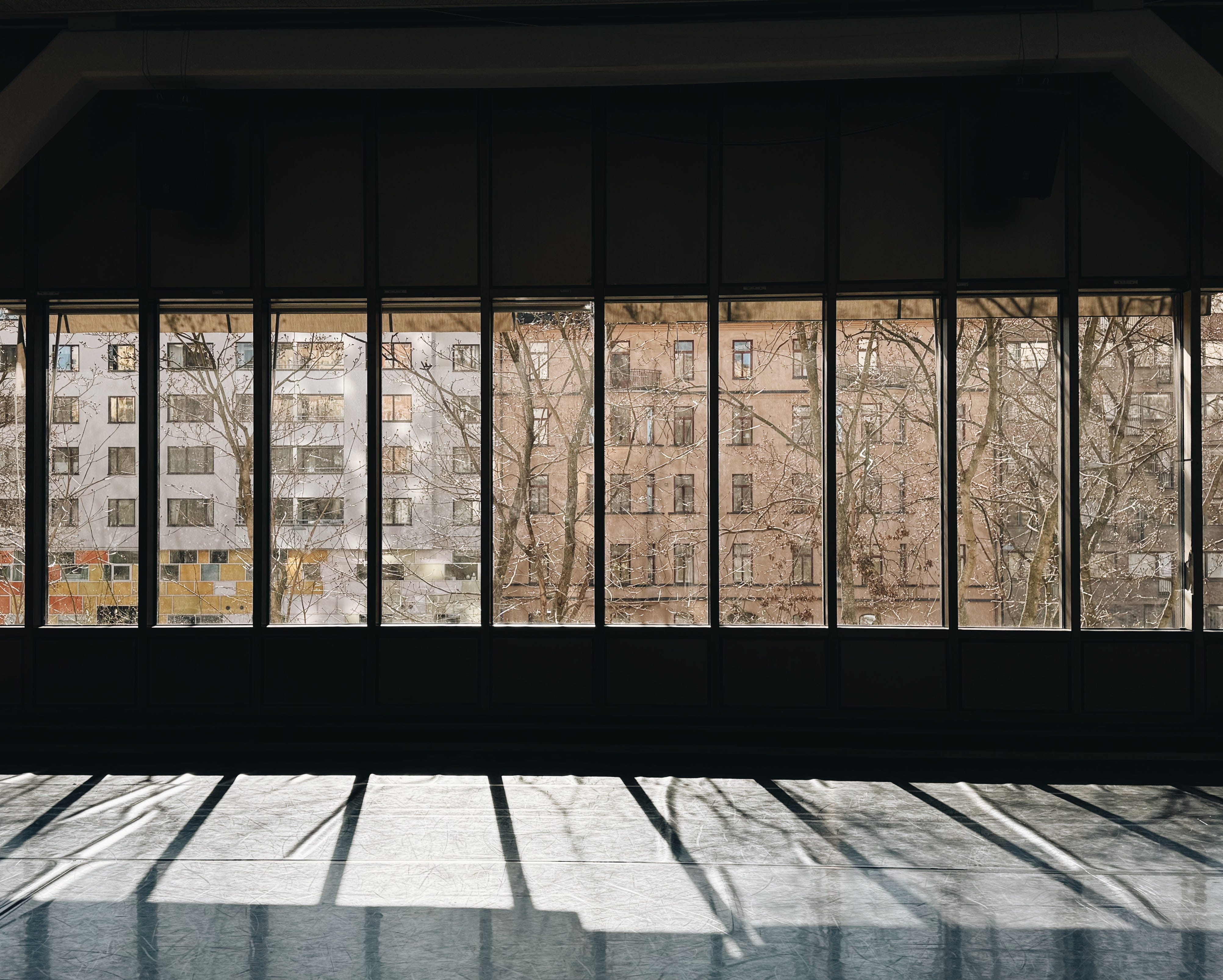
For three hours we were led through shaking, improvising, balancing, imagining, moving alone and with others, sometimes upright and expansive, sometimes down on the floor. At various points we were asked to picture doubles or triples of ourselves, to relate to the room as though gravity had shifted, to let movement arise rather than plan it. I threw myself into it with the kind of delusional confidence that has gotten me surprisingly far in life. At moments I felt like Elaine Benes from Seinfeld3 , fully committed to my own free-form logic and carrying on as though I were, in fact, a trained dancer. And then, twice, I felt myself come close to properly—and quite inappropriately— bursting into tears. I had not expected that an afternoon spent flinging my limbs around a bright room in north Stockholm might bring me to the edge of tears. Some pressure valve had clearly given way. Whether it was the citizenship news, or everything that had built up around it, or simply the fact that movement can get to places brain prefers to leave untouched, I still could not say. Probably all three.
During the break, several women said they felt as though they had just come out of a sauna, gooey, relaxed, newly porous, and spoke wistfully about beginning every day with three hours of movement. I, by contrast, tried to make small talk with the two women next to me, asking whether it was their first time there. It was. The conversation died almost immediately, as these conversations so often do for me in Sweden, and I smiled as I stepped outside for some fresh air.
In the second half, we were paired up for an exercise in which one person lay on the floor while the other cradled and gently moved their head. The point, as far as I could tell, had something to do with relaxation, trust, surrender, or presence. Unfortunately, what I felt, as a complete stranger held my skull in her hands, was an acute awareness of how heavy my head is. Literally. I became preoccupied with the burden I was imposing on this poor woman, who had not asked to spend her Sunday supporting my giant cranium. I briefly explored whether one can make one’s head lighter through intention alone. The answer is: no. Eventually I gave in, though I cannot report any revelation beyond the fact that surrender is difficult.
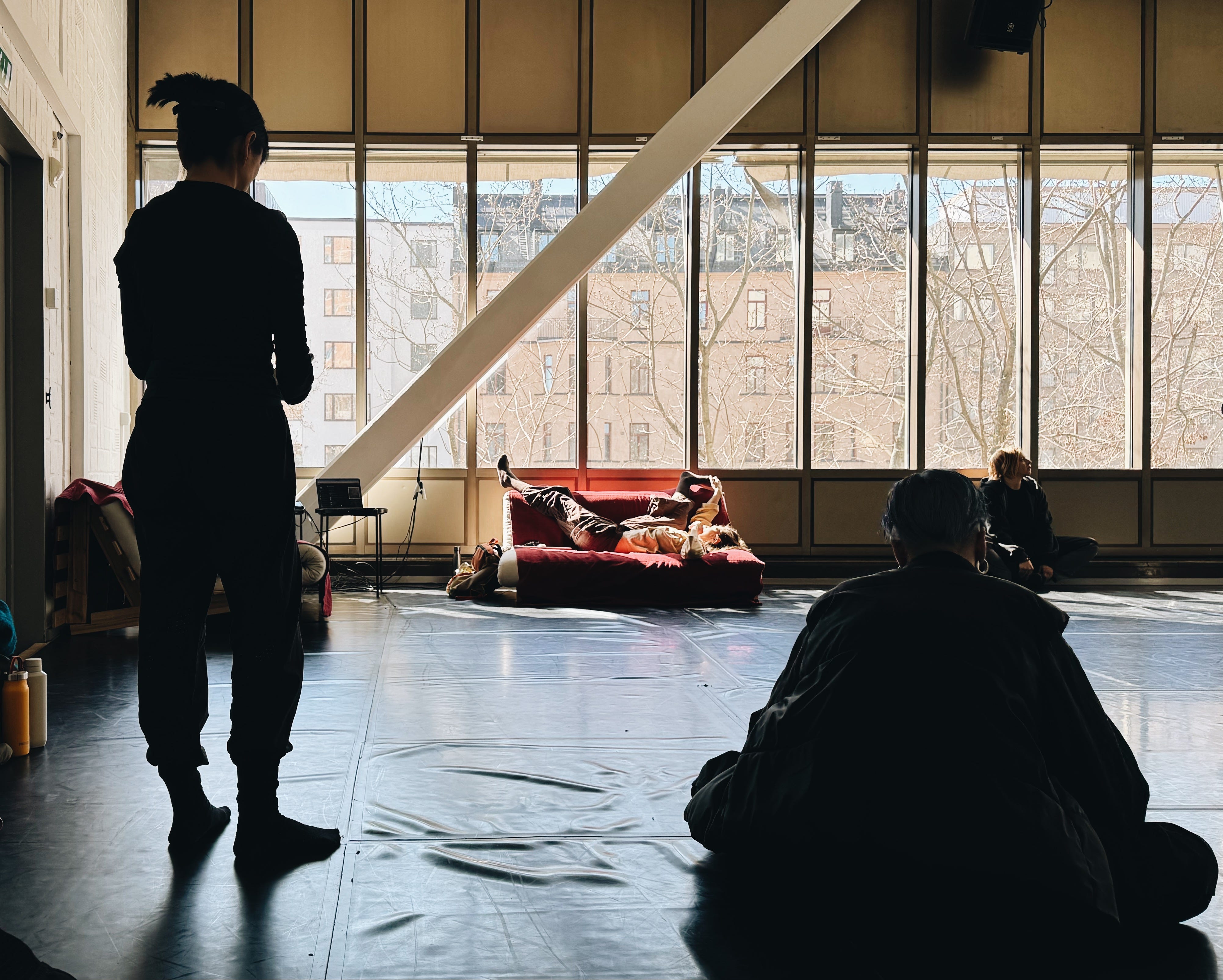
When it was my turn to hold her head, matters did not improve. I found myself just as preoccupied with whether my hands were positioned correctly, whether she was comfortable, whether her head felt as heavy as mine, whether I was offering any real comfort or just making things even more awkward. A few minutes in, my knees were starting to really hurt on the floor, and I had to figure out how to shift my position without dropping her head. I was twisting and contorting like a jellyfish while the instructor said, “Great, just like that,” which, judging by the room, was almost certainly directed at someone other than me. If the exercise was meant to teach ease, it instead reminded me that even in highly curated spaces of release, my first instinct is to manage. When we finally returned to dancing, I shook out whatever remained and left feeling lighter, or at least less congested in the soul.
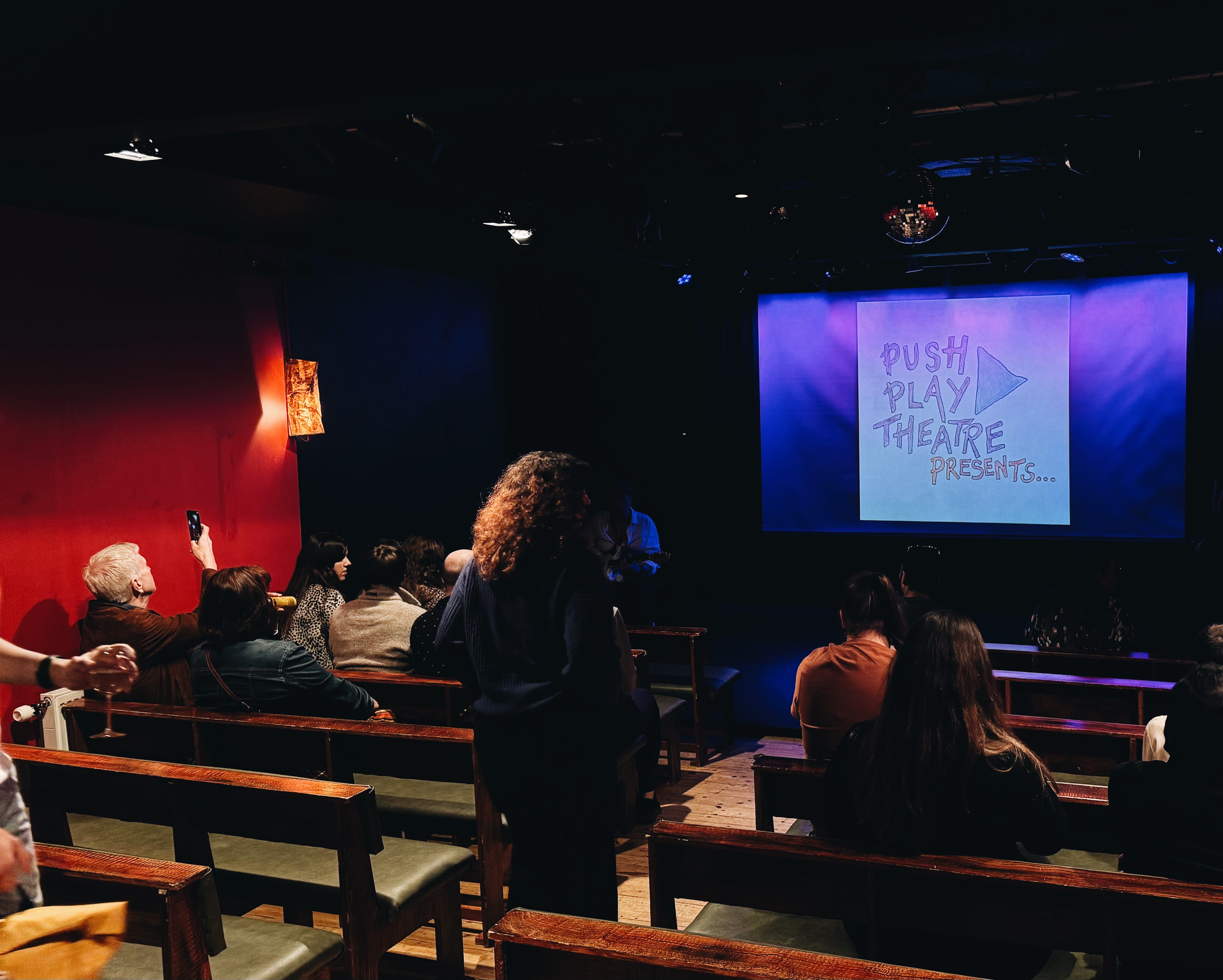
Then I went home, showered, ate, and headed back out for what I believed would be an evening of participatory improv theatre. As I understood it, a poster would serve as the prompt for a collectively improvised narrative, and those of us who had signed up would somehow act our way through it. I had done exactly one improv session in graduate school, but as with the dance workshop, I arrived buoyed by the sort of confidence that is likely beyond delusional. The worst that could happen, I told myself, was that I would make myself laugh. Imagine, then, my simultaneous relief and disappointment when I learned that what I had actually signed up for was not a workshop but a performance.
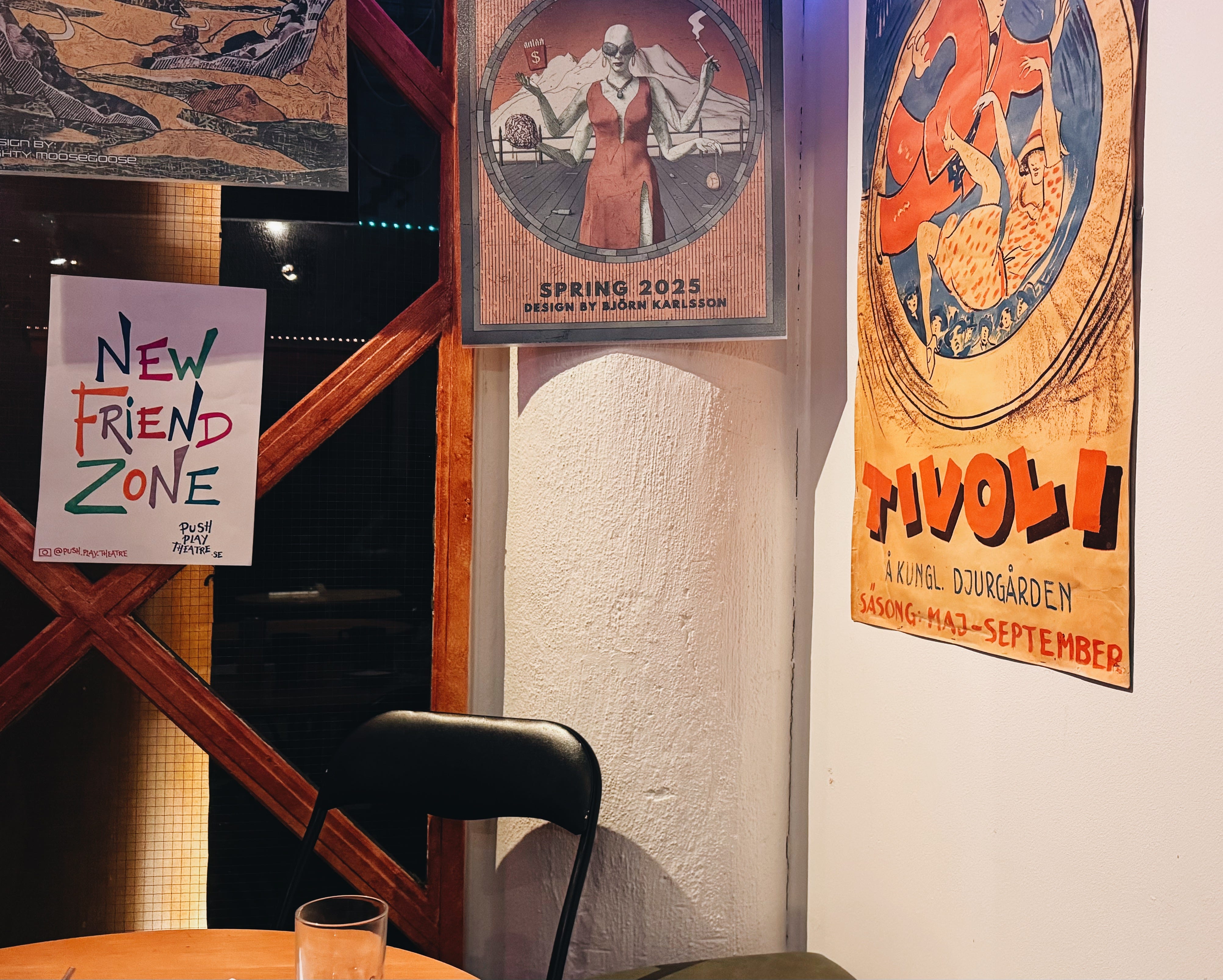
Onstage were three actors, the host and two men, with a guitarist off to the side supplying improvised sound effects and musical texture as they built an hour-long narrative out of a single visual prompt. It was silly and impressive in roughly equal measure like a sort of community Saturday Night Live. One person offered a premise, another ran with it, another undercut it, and somehow a world took shape. It was unpolished and held together entirely by attention, timing, and the willingness of everyone involved to keep going even when things bombed. In a moment when AI is increasingly invited to assist with, automate, or replace nearly every form of human effort, there was something genuinely refreshing about watching people make a whole evening out of nothing but their own minds, instincts, and presence.
After the performance there was a storytelling gathering, populated, it seemed, largely by immigrants and expats, many of them in search of the ordinary miracle of social life in a country that can be hard to enter emotionally. People told funny stories about dating, miscommunication, childhood, home, and the absurdities of trying to build a life elsewhere. Nobody appeared to be a professional storyteller, which was part of the charm. These were not polished narratives. You could feel people thinking in real time, adjusting their pace, searching for the right beat, deciding what to reveal and what to leave out. It struck me as yet another form of intelligence. I thought it was extremely brave.
It made me think about how narrow our idea of intelligence has become, how much prestige we now give to analysis, language, output, and speed. The body, meanwhile, is treated as vessel, a maintenance problem, and at best a gym project. We ask it to carry us, attract others, survive all sorts of stress the mind subjects it to, and sit still for long periods of time. What we leave very little room for is the possibility that intelligence might live there too, in rhythm and sensation, in intuition, in knowing when to move and when to pause, when something is off, when something is too much, when grief or joy has already reached the chest before the brain has had the luxury of catching up and naming it. I felt a renewed respect for the body as more than a ferry for the brain.
I stayed for about an hour of this improvised story time and then left. By then I had reached my limit. It had already been a strange day, one that began with citizenship news and ended in a string of rooms where I felt out of place. I did not emerge transformed into some creature of pure somatic wisdom. I was still self-conscious. Still capable of turning an exercise in surrender into a practical concern about neck support. But the day left me with the feeling that the body often understands first, before the mind has managed to sort it all into something coherent.
That morning, a plain email told me I had become Swedish. The news arrived in the most ordinary way possible, but my body did not experience it that way. It was my body that wanted to tell the strangers on the metro, the flower vendor, every woman in that room. It was my body that nearly burst into tears. Long before I had found a sensible way to think about it, some deeper and less orderly part of me had already understood that something enormous had happened, and that a life had shifted.
This essay is part of Out of Office, an eight-week field-research series. Each week, I attend two events entirely outside my usual orbit, alone and without the buffer of networking, professional context, or familiar social codes. The project looks at how different communities organize around passion, how inclusion is constructed or withheld, and what that reveals about belonging, craft, collective ambition, and the habits that keep capable adults from going dull.
A bodywork and movement method in which a practitioner uses gentle, repeated movement and touch to improve communication across the body and restore ease, mobility, and function.
A somatic education method that uses gentle movement and directed attention to increase body awareness and help people move with greater ease, coordination, and choice.
I literally laughed out loud at the heavy head part 😆 I would have totally been the same. Really sad this series is almost at an end, it's been one of my favorite things to listen to as of late!
The body knows everything. If you haven’t already read it, Bessel van der Kolk’s the Body Keeps the Score is worth a read.